
Address in the Second Year of Presidency
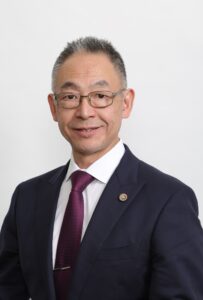
KITAMURA Shuichiro,
President,
Japan Patent Attorneys Association (JPAA)
1. Introduction
On commencing the second year of my term as the president of the Japan Patent Attorneys Association (JPAA) on April 1, 2026, I would like to express my sincere gratitude for your cooperation in JPAA’s activities.
The slogan for this fiscal year is the same as that for the previous fiscal year, which I set up in my first year of office for a two-year plan: “Pursue Your Own Way of Acting as a Patent Attorney! Be Ambitious! Shed Light on Diverse Activities of Patent Attorneys.”
Today, generative artificial intelligence (AI) has started to affect all fields, including research and development, business, education, public administration, and intellectual property (IP) practices. We are now in an era in which time-consuming tasks that had been conducted by humans in the past, such as writing text, summarizing, translating, assisting research, and organizing ideas, can be completed up to a certain level in a short time by AI. Furthermore, the quality of AI-generated content is definitely improving.
In the future, patent attorneys will be required to have even higher expertise, a greater ability to apply knowledge, and more convincing power than before.
Since FY2025, we have been working on the presentation of role models as one of our pillar projects. The objective of this project is to praise and emulate the pioneering spirit of our predecessor patent attorneys who have opened up opportunities for their activities, to further expand social needs for the presented role models’ activities by publicizing them, and to share the relevant skills with patent attorneys who aspire to engage in those activities, thereby meeting society’s expectations. We must reinforce patent attorneys’ adaptability to the rapid changes occurring in the social environment.
The major initiatives that JPAA will focus on in this second year and the goals of those initiatives are explained below.
2. Major policies and projects
(1) Presentation of role models
One of the activities of the role models explained above was the utilization of the open and close strategy using time stamps. We were able to go so far as to conduct training for sharing the relevant skills by the end of the previous fiscal year regarding this activity. As for other themes, we completed preparations for skill-sharing training and creating content for information dissemination, using outstanding achievements of patent attorneys in areas such as IP consulting and the development of branding strategies as models, by the end of the previous fiscal year. This fiscal year, we are making preparations to disseminate information for cultivating clients, to conduct skill-learning training for patent attorneys who aspire to engage in role models’ activities, and to present role models for new themes, such as those who have engaged in IP revitalization activities for agricultural, forestry, and fishery operators, and IP support activities for content providers, among others.
(2) Initiatives concerning IP business management consulting
We will expand IP business management consulting services led by patent attorneys.
IP business management support provided to specific companies through government subsidies does not serve as ongoing support for those companies. The purpose of providing support to specific companies is to spread the use of the successful methods achieved by these companies to other companies. The ultimate form of self-sufficiency for the companies that receive support through government subsidies will be that they seek ongoing consultation from patent attorneys for a fee after the termination of the support.
To achieve this situation, it is necessary for the supported companies to realize the economic benefits gained from using a patent attorney’s IP business management consulting service, and to develop an awareness of paying a fee to the patent attorney who devotes their time and energy for the consulting. Unless it becomes a premise that IP business management consulting is a paid service, patent attorneys will only be able to sustain their businesses by guiding the companies to subsequent IP right acquisition services. Then, there will be a possibility that the direction in which a patent attorney guides their client will deviate to a direction that does not prioritize the client’s economic benefits.
In order to disseminate the IP business management consulting led by patent attorneys throughout Japan, we will strengthen coordination between patent attorneys in each region and JPAA’s IP Management Center as well as organizations, such as the Regional Bureau of Economy, Trade and Industry, in each region, and will accumulate successful cases in which supported companies realize the economic benefits gained from the consulting.
(3) Initiatives concerning agricultural, forestry, and fishery operators
With the formulation of the “Ministry of Agriculture, Forestry and Fisheries’ Intellectual Property Strategy 2030,” which sets forth the intellectual property strategy of the Ministry of Agriculture, Forestry and Fisheries, there is growing social demand to strategically protect and utilize IP also in the field of agricultural, forestry, and fishery businesses.
The protection of the agricultural, forestry, and fishery sector through use of the IP system will only be possible by making full use of brand strategies employing variety registration, geographical indications (GI), regional collective trademarks, and ordinary trademarks, as well as IP mix strategies that also comprehensively utilize patents and designs. We must develop optimal strategies that suit the unique characteristics of the respective agricultural, forestry, and fishery businesses.
In order to drive forward the development and dissemination of smart agricultural technologies, the Innovation Promotion Conference for Smart Agriculture (IPCSA), which promotes various activities, including matching between stakeholders and human resource development, is also stepping up its efforts. Thus, patent attorneys are required to provide support to ensure the appropriate utilization of IP systems in dynamic situations.
This fiscal year, we will further increase opportunities for our members to practically utilize the knowledge and skills necessary for consultation and support services in the agricultural, forestry, and fishery field that they have acquired through training programs for tackling various challenges facing modern agriculture (agritech [smart agriculture], specifications and standards, such as Japanese Agricultural Standards [JAS], contracts on utilization of AI and data, borderless competition, branding, etc.). To this end, as in the case of disseminating IP business management consulting, we aim to provide ongoing support to agricultural, forestry, and fishery operators in each region by organizing lectures, etc. for improving their IP literacy.
(4) Initiatives concerning the entertainment and creative industries
We will identify the current status and issues of the Entertainment and Creative Industry Strategy aimed at overseas expansion, and gain an understanding of the current circumstances. Then, we will conduct research and study on the IP services and related services (including IP management services relating to contracts, terms of service, copyright licensing, and others) in the Entertainment and Creative Industry Strategy, and identify services in which patent attorneys should be involved in the Entertainment and Creative Industry Strategy and develop human resources.
We will also send out information to increase the public awareness that the involvement of patent attorneys, who are highly specialized human resources, is necessary for the protection and development of entertainment and creative industries.
(5) Reinforcement of initiatives concerning standardization
As patent attorneys are positioned as human resources for standardization strategies and human resources for planning, development, and negotiations, they are particularly expected to plan and support open and close strategies. In order to meet this expectation, we will conduct research on the skills required to take the lead in standardization efforts, mainly in the Industrial Standards Committee and the Working Group on the Integrated Utilization of Intellectual Property and Standardization, and increase the number of patent attorneys who have these skills through member training programs. While gathering the skills of human resources for standardization strategies from those who have experience in important cases is challenging due to the high confidentiality of the cases, we will increase the number of patent attorneys registered in the Standardization Human Resources Directory (STANDirectory)” and strengthen our support to enable them to confidently formulate standardization strategies as highly specialized human resources.
(6) Response to AI
We will continue to examine use cases for applying rapidly evolving AI tools to patent attorneys’ work. Based on this examination, we will consider revising the AI Tool Utilization Guidelines in a timely manner so as to enable members to use AI in their work with a sense of security. In addition, we will provide training for members with a particular focus on methods for improving work efficiency through the utilization of AI tools, with an aim to enhance our members’ ability to deal with AI tools.
(7) Bidding for entrusted projects (IP Management Center / IP Support Center)
When JPAA dispatches patent attorneys at the request of an external organization for the purpose of disseminating the IP system, the amounts of compensation paid to the patent attorneys are limited. In contrast, the external organization may pay a large amount to the entrusted project operator for the implementation of the project. If the entrusted project operator does not understand the value of patent attorneys as highly specialized human resources, the time charge for patent attorneys will be set low in the project specification.
In order to put an end to such situation, JPAA will use the unified qualification to participate in bidding across all ministries and government agencies obtained in the previous fiscal year to submit bids for projects conducted by relevant organizations. By being entrusted with these projects, we aim to achieve appropriate compensation levels for patent attorneys, while at the same time, we will revitalize JPAA’s affairs, particularly those conducted in local communities, by implementing such measures as preferentially dispatching members who engage in JPAA’s affairs to entrusted projects, for example.
(8) Initiatives for achieving appropriate compensation levels for patent attorneys
Patent attorneys say that they are finding it difficult to raise fees at their firms amid the recent rise in prices. According to a questionnaire survey conducted by JPAA, the compensation level was found to have remained unchanged for over 10 years at several patent attorney firms. Over the past 10 years, the cost of running a firm has definitely increased due to such factors as rises in prices, personnel cost, and social insurance premiums.
If the amount of compensation for patent attorneys stays fixed amid such rise in the cost of running a firm, it will put pressure on patent attorney firms’ revenues, leaving them with no room to hire or train patent attorneys to ensure business continuity, and making them unable to conduct sustainable business management.
In order to solve this issue, we will push forward a shift in awareness about patent attorneys’ fees through a training program inviting lecturers from the Japan Fair Trade Commission and sharing issues arising from the difference in awareness about fees between patent attorneys and clients. We will create an environment in which patent attorneys do not submit to providing quick and easy services to match low fees, but can actively explain to clients the fees that are necessary for adding the value the clients are seeking, and gain the clients’ understanding.
3. Closing
JPAA will conduct activities for creating an environment that fosters the development of many patent attorneys who will further expand opportunities for patent attorneys’ activities, bring large economic benefits to clients, and be highly regarded in society, so that, in these turbulent times, talented young people will be attracted to the profession of patent attorneys and aspire to become patent attorneys, and that young members already practicing as patent attorneys can have hope for the future. We appreciate your understanding and cooperation in JPAA’s activities.
